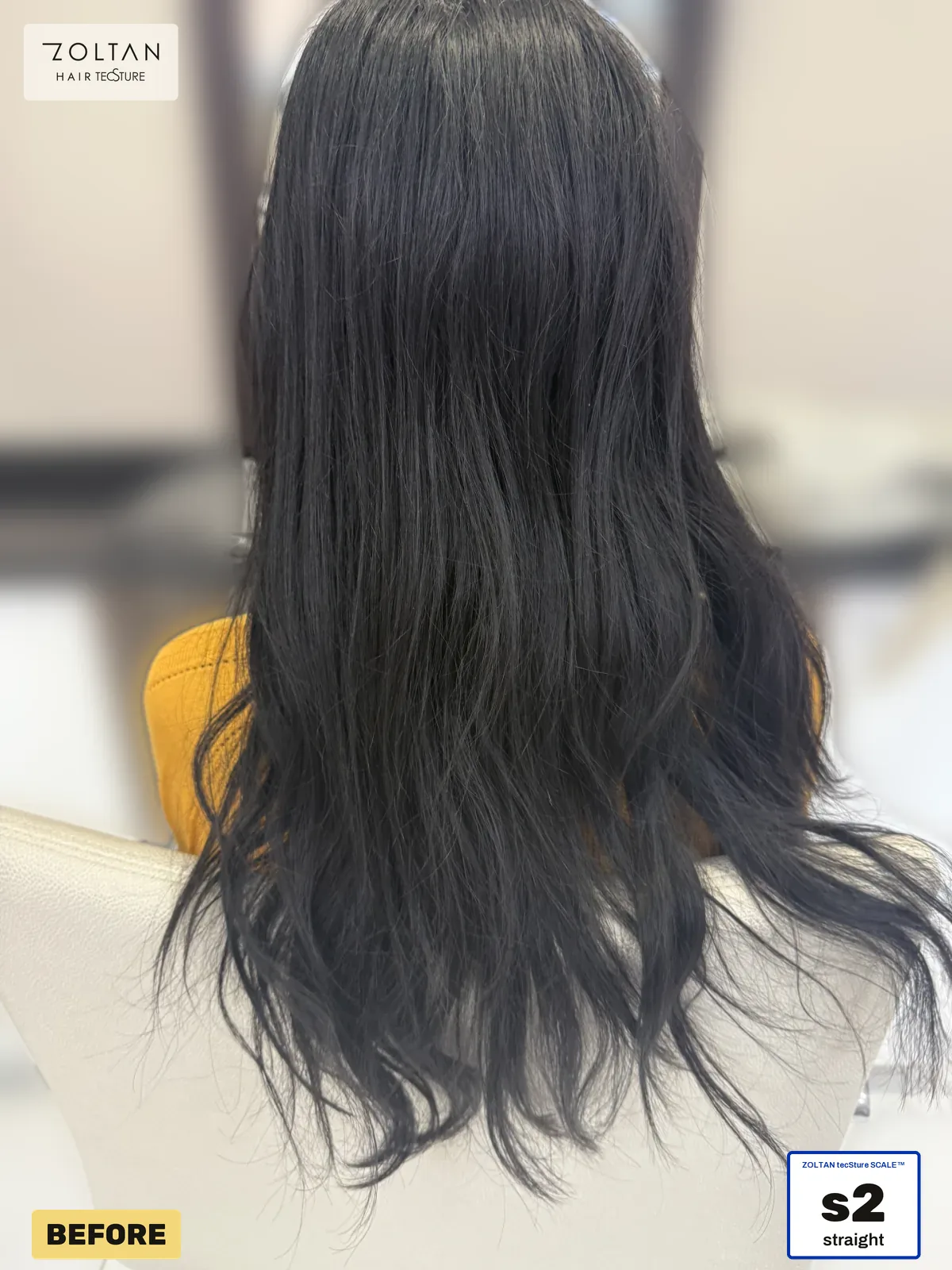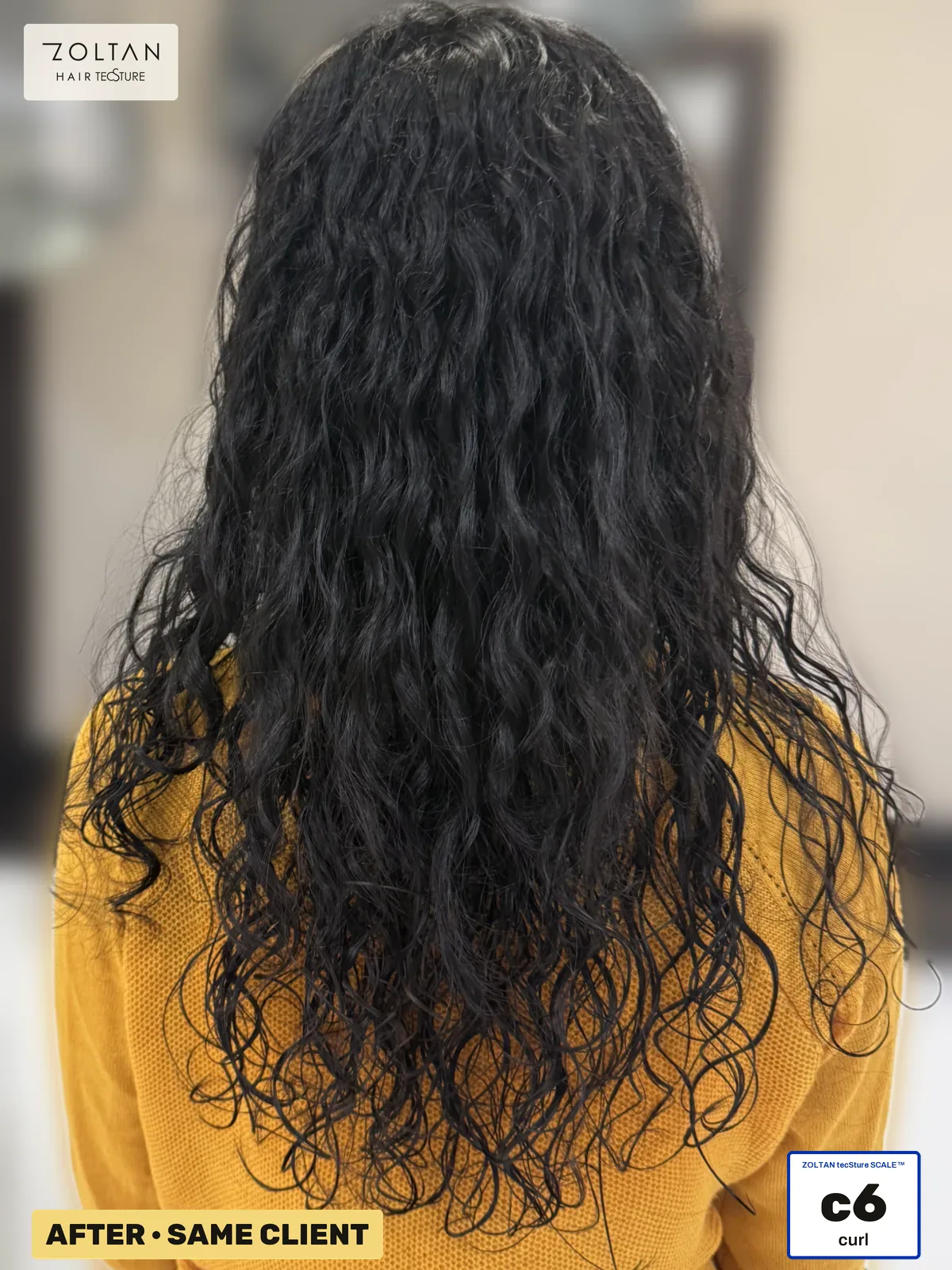
Zoltan Hair · Mayfair · An Up treatment · classic perm

Wavement Cold

The traditional perm, done with a light hand. Body, movement and shape put into hair that has none — so it holds a style instead of collapsing by lunchtime. Curl that is there wet and dry.

See prices & bookAll Up treatments
2–4 hrsIn the chair
by length and rod size
Wet & dryCurl present
either way
6+Months it lasts
the longest-lasting perm

Before anything else

Everything you do to your hair costs it something. Including nothing.

This is the part most salons leave out, so I would rather you had it first.

Think about a bag you actually like

Not the one in the box — the one you have carried every day for three years. Rained on. Put down on the floor of the tube. Stuffed too full. Keys rattling around in it. It does not look like it did in the shop and it never will again. That is not neglect. That is what carrying it every day does.

Your hair has been with you far longer

The lengths on hair past your shoulders are often four, five, six years old — grown, then worn, every single day since. Rain. Sun. Hard London water. A hairband. A brush pulled through it when you are late. A towel. A pillow. A blow-dry. An iron at 200 degrees because it would not sit down otherwise. None of it dramatic, all of it adding up — and unlike skin, hair does not repair itself. What happens to it stays happened.

And you never notice you are doing it

Nobody stands at the mirror thinking that is damage. You put it up because it is windy. You go over it again because one bit will not sit down. You rub it dry because you are late. It is automatic, it is every day, and it is a couple of thousand small decisions a year that nobody counts. A treatment is the one thing on that list you actually decide to do — which is why it feels like the risky one, and why it gets all the blame.

So the honest question is not “will this damage my hair?”

Everything does. The question is what you spend, and what you get back for it.

Yes, it has a cost — and this one is a real one

This treatment breaks bonds and reforms them. That is not a coating and it is not reversible. It is the whole reason the result is permanent, and it is the reason this is the treatment I turn down most often.

What you get back

Hair that looks better, feels smoother and above all behaves — every day, without being fought. The shine is real and so is the manageability. What I will not claim is that it leaves your hair healthier than it found it. This one genuinely spends.

And the daily spend drops

Hair that lies down does not get gone over five times with an iron. Hair that is not fighting you does not get brushed hard when you are rushing. For a lot of people the damage they stop doing is larger than the damage I do — but on this treatment that is a calculation, not a slogan.

Which is why it needs hair that has it to spend

Some hair has already spent more than it had, and for that hair the answer is no, or not yet. Bleach history first, before anything else. You will get told honestly which one you are — and being told no here is me doing my job, not losing your business.


What I promise

The three numbers, honestly

A perm gives you curl — but what you are really buying is hair that holds a shape.

Salon time

2 – 4 hours

Longer on more hair and on smaller rods, because every section is wound individually. This is handwork and it is not hurried.

What you get

Curl, wet and dry

A cold perm shows its curl at its curliest when wet and relaxes a little as it dries. Rod size and shape decide everything — tight ringlet through to soft body — and they are chosen on your face and your cut, not from a chart.

How long it lasts

6 months and beyond

The longest-lasting thing on the Up menu. It softens gradually rather than dropping out — the curl loosens over months and the roots grow in straight, so it fades into a soft wave long before it needs doing again. Plenty of people get well past six months from one appointment.


What it actually does

A perm is the honest opposite of straightening — same bonds, opposite direction.

It breaks the bonds and reforms them around a rod

A reducing agent opens the disulfide bonds, the hair is wound onto rods in the shape you want, and a neutraliser reforms the bonds in that new position. Same chemistry as straightening, aimed the other way — which is exactly why doing both is one discipline rather than two.

The rod is the design decision

Diameter sets how tight the curl is; shape sets whether it is a spiral, a wave or root lift. Wrapping direction and tension decide how it sits around your face. This is where a perm is won or lost, and it is nothing to do with the chemistry.

Bounce cannot be forced

A shape can be put into almost any hair. Whether it springs depends on healthy disulfide bonds — which is why bleached hair takes a curl that immediately drops. Bounce is earned, not applied.


Placement

Where the rods go matters as much as how tight they are

The part almost nobody explains. Two people can have identical rod sizes and walk out looking nothing alike — placement and direction are why.

All over

Full curl or full body

Root to end, evenly. Rod size then decides everything from defined ringlet to soft body — the same placement gives completely different results depending on diameter.

Mid-length and ends only

Movement without root curl

Roots left straight so the hair still sits close at the top, with shape through the length. Flattering on most face shapes and the easiest to grow out.

Root only

Lift, not curl

Rods at the root, lengths untouched. For hair that collapses at the crown — height and support with no visible texture at all.

Under-layer only

Fullness with a smooth surface

The layer underneath is waved for body and support while the top stays sleek. This is what most people are describing when they say they want thicker-looking hair rather than curly hair.

Face-frame

Shape where it is seen

The sections around the face only. Small amount of work, disproportionate effect, and the easiest way to try this if you are not sure.

Direction, not just position

The detail that separates them

Which way each rod is wound decides whether the curl falls forward onto the face, sweeps away from it, or lifts. Same rods, same placement, opposite direction — a completely different result.

Bring photographs of what you like and what you do not. The second set is usually more useful, and it stops us agreeing on a word that means two different things to the two of us. See also rods: size vs shape.


Why a treatment, rather than just looking after it better?

A fair question, and the honest answer is not the one that flatters me.

In an ideal world you would not need me

You would come in every few weeks for a conditioning treatment, and in between you would tie it up, air-dry it and leave it alone. That works. It genuinely does.

But almost nobody in London lives that way

Most of the people who sit in my chair are one of two. Either they can afford the upkeep and have not got the two hours a month — the standing appointment is the first thing cancelled, every time, because something at work moved. Or the time is not the problem and the money is, and a couple of hundred pounds a month on something that lasts three weeks is simply not a sensible way to spend it.

Either way you end up in the same place

Hair that never gets properly looked after, and gets fought with instead. Rushed. Ironed. Pulled up. Every day.

That is the actual case for this

One appointment, and the hair looks after itself for months. Not because it is magic and not because it is free — it costs your hair something and I have been straight with you about that. But it turns the upkeep from something you have to keep finding time and money for into something you did once. For most people that is the only version that survives contact with a real life.

And if you are someone who can do the standing appointment and the careful routine — tell me. That is a legitimate answer and I will say so.


In the chair

What actually happens on the day

1 · Read and plan

Pattern, damage and colour history, then the actual design: rod size, rod shape, where the curl starts and how it falls around your face. Most of the result is decided before anything is applied.

2 · Wind

Every section wound individually onto rods, with even tension. The longest part of the appointment and the part that decides whether it looks deliberate or dated.

3 · Reduction

The reducing agent is applied and the bonds open around the rod shape. Checked repeatedly rather than left on a timer — this is where over-processing happens.

4 · Rinse

Rinsed thoroughly on the rods, before neutralising. Skipping or shortening this is a common cause of a limp result.

5 · Neutralise

This treatment does need neutralising, and it is where perms are ruined. An oxidiser reforms the bonds in their new curled position and locks the result. Rushed, and the curl drops within days — which is why perms have the reputation they do.

6 · Unwind and finish

Rods out gently, conditioned at a low pH, dried without disturbing the pattern. You will see the real result before you leave.


What you actually get

It holds all day

The end of hair that lifts for an hour and gives up by eleven. Product finally has something to grip.

Shape in the cut

A crop, a bob or a mid-length with no natural texture has nothing to work with. This gives the cut something to be.

Less work, not more

Wash, scrunch, diffuse or air-dry. Most people spend less time on permed hair than they did fighting flat hair.

It fades softly

No line, no shelf. It loosens into a wave over months rather than dropping out overnight.


Who it suits — and who it does not

Ideal

S10 – S9 · damage at N

Straight, fine to medium hair with no curl memory and healthy bonds. The flatter and healthier the hair, the better this works.

Good for

W8 · uneven natural wave

Hair with a bit of its own movement that is inconsistent — wavy on one side, flat on the other. A perm evens it out rather than creating something from nothing.

Usually no

Bleached, highlighted, or damage at DD

Bleach destroys the bonds a curl needs to spring from. The curl goes in and drops out within weeks, and the hair pays for it. Come and let me look rather than deciding from a page — light colour is often fine, bleach rarely is.

Book a mini consultation →

No surprises

Things I would rather you heard from me than found out in the chair

None of this is in anybody else's brochure. It is all true, and knowing it in advance is the difference between a surprise and a plan.

It will smell

Anything heated to 200 degrees smells — think of food. Your own mousse or styling product on there smells too. Some treatments frankly smell like wet dog for a day. I work next to an open window and it clears, but I am not going to pretend it does not happen.

Some treatments shift your colour

Not all, but some will lift or warm what is already on your hair. If that applies to yours I will tell you before we start and we plan around it. I spent years as a colourist, so this is a conversation rather than a surprise at the mirror.

It can go flat

Certain hair looks bouncy for a fortnight and then sits down. I can usually work around it — leaving the roots alone, choosing a lighter strength, changing where I place the tension. But only if I know beforehand that volume matters to you. Say it at the consultation, not afterwards.

Damage is the thing we are trying not to do

These are chemical services and they are not free. Done properly on suitable hair the trade is small and worth it. Done wrong, or on hair that has already been through too much, it is breakage — which is exactly why sometimes the answer is no.


The first two visits, we are getting to know each other

This is the most useful thing on the page, and the thing almost nobody says out loud.

The first appointment is a learning appointment

I do not know your hair yet — and I do not know you. I know the chemistry; I do not yet know how yours takes it, what the last person left in it, or the life it has to survive: your mornings, your training, your travel, how much time you will honestly give it. So I work carefully the first time, and careful means slightly under rather than slightly over. That is deliberate. I can always add more next time. I cannot take it back out.

The second visit is where it comes together

By then I have seen how your hair behaved, how long it held and what it did in week six — and you have lived with it, and can tell me what you actually thought. Now I can push further or pull back with something real to go on. If the first result is good but not quite it, that is not a failure. That is the information.

My “perfect” and your “perfect” may not be the same thing

I might look at your hair and see a result I am pleased with — even, healthy, doing exactly what the chemistry should do. You might look in the mirror and want it flatter, or curlier, or with more root left in. Neither of us is wrong. We are looking at different things.

So tell me, in your own words

Tell me what you want it to look like before we start, and tell me afterwards if it is not that. Not to complain — so I can adjust it next time. The clients whose hair I get right consistently are almost always the ones who told me what they actually wanted on visit two.

And the honest end of it: maybe I am not the right stylist for you. I am not saying I am — I am trying, and by the second visit we will both know. I would rather give you that sentence than a guarantee nobody could honestly make.


Whatever it is called elsewhere, this is the category.

Classic perm · Cold perm · Body wave · Root perm · Texturising perm · Beach wave perm

All the same underlying chemistry at different rod sizes and strengths. The differences people are sold as separate treatments are, almost always, differences of technique.

Wavement Cold is my own system, and I have been perming since 1991 — long enough to have watched the perm go out of fashion, come back, and be renamed several times on the way. Read the perm guide and rods: size vs shape — both free.


Colour

When to do your colour

Perming and colour both work on the same hair, and doing them in the wrong order or too close together is how people end up with damage they blame on the perm.

Colour after, not before

Leave at least two weeks

Perm first, let it settle, then colour. Colouring immediately before means putting a second chemical process onto hair that is about to have its bonds opened.

Bleached hair

The honest limit

Bleach destroys the very bonds a perm needs to grip. A curl can be put into bleached hair; it will not bounce, and it will drop within weeks. This is where I say no most often on the Up side.

Tell me everything

Including henna and box colour

Henna and metallic salts react badly with perm chemistry — occasionally violently. Anything in your hair, however long ago, I need to know about.


Skin test

I do not routinely do one for straightening or perming, and there is no blanket UK requirement for these services — it is the product manufacturer and the insurer that drive it, not the law. Where a specific product calls for one, I will tell you and we will do it. Hair colour is a different matter: there it is effectively mandatory.

Strand and elasticity testing

Also not routine. I read the hair at the consultation and again on the day. Where I judge it necessary, I will say so before we start — and we test before anything else happens, rather than finding out halfway through.

What actually protects the hair

Knowing what has already been done to it. Colour history, previous chemistry and how it was cared for tell me more than any test — which is why I ask for the history before I ask what you want.


Making it last

The first 48 hours

The bonds are freshly reformed and still settling. No washing, no tight ties, no clips, no brushing it out. Scrunch rather than comb, and let it dry in its own shape.

Never brush it dry

The single biggest mistake with any perm. Brushing dry curl separates it into frizz. Comb through with conditioner in the shower, then leave it alone — fingers and a diffuser only from then on.

What you wash it with

You do not have to give up lather. A gentle sulphate cleanser is fine; heavy strippers dry curl out fast. Two or three washes a week, always with conditioner.

Not sure about yours? Send me a photo of the ingredient list and I will tell you whether to keep it.


The terms, plainly

The same glossary appears on every treatment page here, so the language means the same thing wherever you read it — with what each term means for this particular treatment underneath.

pH

The acid-to-alkaline scale. Hair sits at about 4.5–5.5, slightly acidic. Alkaline products swell and open the cuticle so chemistry can get in — more change, more cost to the hair. Acid products close and smooth it — gentler, shinier, less penetration.

On Wavement Cold: alkaline. The cuticle is opened so the reducing agent can reach the bonds. The strength is chosen against your hair’s condition, not against how much curl you want.

Disulfide bonds

The strong, permanent sulphur-to-sulphur links. They give hair both its strength and its bounce. Hydrogen bonds, by contrast, are weak and temporary — broken by water and heat, which is why a blow-dry drops in the rain.

On Wavement Cold: broken and reformed around the rod. The same bonds a straightening treatment works on, aimed the other way — which is why this is one discipline rather than two.

Porosity

How easily hair absorbs and holds water and chemicals. High porosity means a raised, damaged cuticle: it soaks product up fast and processes quickly and unevenly. Low porosity is resistant and needs more time.

On Wavement Cold: decides the timing entirely. Porous hair grabs a cold perm fast and can over-process in minutes, which is why it is checked constantly rather than left on a timer.

Bounce (elasticity)

The ability to stretch and spring back, governed almost entirely by disulfide bond health. You can impose a shape on almost any hair. You cannot impose bounce — it has to be earned from healthy bonds.

On Wavement Cold: the whole product. A cold perm gives shape and spring — but only if the bonds are healthy enough to spring. Bleached hair takes the shape and loses the bounce.

Reduction and neutralisation

The two-step chemistry of any perm or relaxer. Reduction breaks the bonds so the hair can be reshaped; neutralisation reforms them in the new shape and locks it in.

On Wavement Cold: both, and neutralisation is where perms are ruined. Rushed, and the curl drops within days.

Processing time

Timed to the hair, not to a clock on the wall. Porosity, texture and history all change how fast a treatment develops.

On Wavement Cold: two to four hours. More hair and smaller rods mean longer, because every section is wound by hand.


Read further

Where this sits in the wider family

The free guides covering each tradition — what is in them, where they came from and who they suit.


Questions people actually ask

Will it look like an eighties perm?

Only if someone winds it like one. That look came from small rods used uniformly all over the head. Rod size and placement are the whole design, and a modern perm on larger rods reads as natural movement.

Will my hair be frizzy?

Not if you stop brushing it dry, which is the single biggest cause. Permed hair is combed with conditioner in the shower and then left to fingers and a diffuser.

Is it curlier wet or dry?

Wet. A cold perm looks its curliest wet and relaxes slightly as it dries. If you want the opposite — soft when wet, springing as it dries — you want Wavement Hot.

What if I hate it?

You will see it before you leave, and we will have agreed the rod size at the start. It cannot be undone quickly, which is exactly why the planning matters more than the chemistry.

Can I straighten it sometimes?

Occasionally with an iron, yes — the curl comes back when you wash it. Doing it daily will wear the result out faster.

How soon can I colour it?

Two weeks minimum, and colour after the perm rather than before.

Is it safe if I am pregnant or breastfeeding?

That is not my decision to make for you. I will give you the full ingredient list for the exact product I would use so you can decide with your midwife, GP or pharmacist.

Does it damage my hair?

It restructures it, and that costs something — anyone claiming otherwise is selling. On healthy hair at the right strength, well neutralised, the hair stays in good condition. On bleached hair it is a bad idea and I will say so.

Real prices, published.

Four questions about your hair and the calculator gives you the exact price for your length and texture, and the appointment to book. No “from” prices that grow once you are in the chair.

See prices & bookAll Up treatments

Not sure this is the right one? A mini consultation online is £9.95 — it is not a deposit and it does not come off the treatment, and every treatment includes a full consultation on the day at no charge.