
The tecSture Encyclopedia · Smoothing · Keratin and protein family
Keratin treatment
“Keratin treatment” is not one treatment but the general word for semi-permanent smoothing that coats and fills the hair with keratin protein, sealed in with a flat iron. With me it’s a Straightment Semi or Demi.
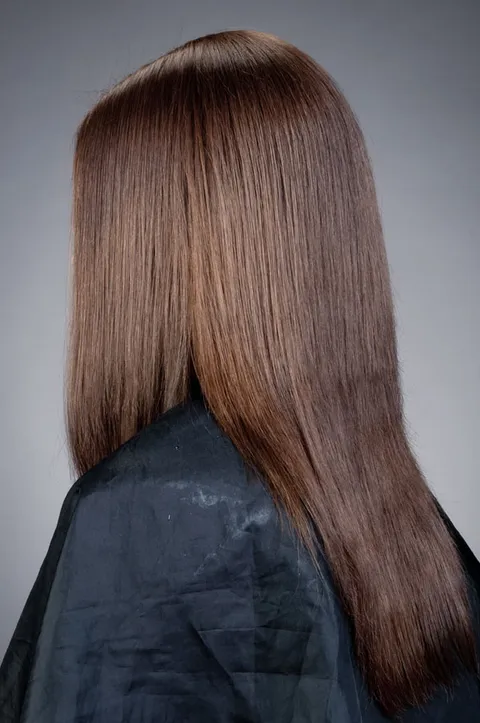
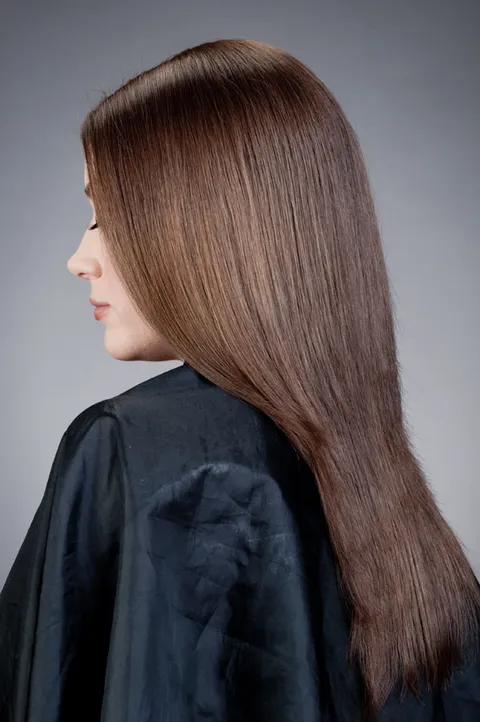
It eliminates frizz, adds shine and loosens curl for three to five months, washing out gradually with no regrowth line. It smooths rather than straightens completely.
Also known asBrazilian keratin treatment (BKT), keratin smoothing, keratin blow dry, permanent blow dry (UK), escova de queratina, banho de queratina — and in Brazil, simply "progressiva".
- Straightening power
- 6/10
- (loosens curl by about half, not pin-straight)
- Frizz elimination
- 9/10
- Damage risk
- 4/10
- with modern formol-free systems, 6/10 with classic aldehyde systems
- Longevity
- 7/10
- (3-5 months)
- Upkeep
- 5/10
Level of change
The Zoltan tecSture Scale runs from 1, straight, to 10, the tightest pattern — one ladder, ten levels. What a treatment does is move you a number of rungs. That distance is the job, and it is what the work should be priced on: the level of change, not the bottle.
A keratin treatment loosens curl by roughly two levels and takes the frizz out completely. It is bought for the frizz; the loosening is a side effect, and it fades rather than growing out.
Two rungs, then it drifts back. No line at the root, no bad month five.
Work out your own code first
Before any of this is a booking, it is a reading: what your hair is, what it has already had, and how much change it can carry. The Zoltan tecSture Scale gives you one code for all three.
History and origin
Keratin smoothingDOWN was born in Brazil in the early 2000s, growing out of the escova progressiva culture of Rio and Sao Paulo. The idea: replace the harsh bond-breaking chemistry of relaxers with a protein coating locked in by heat. It crossed to the USA around 2005-2008, where the brand Brazilian Blowout made the category famous — then infamous, when 2010-2011 testing found formaldehyde in "formaldehyde-free" formulas. That scandal split the market into classic aldehyde systems and the acid-based, formol-free generation that dominates today. Read the full origin story on our escova progressiva page.
Names and native script
- Brazil
- tratamento de queratina; everyday, progressiva
- USA and UK
- Keratin treatmentDOWN, keratin blow dry, permanent blow dry
- Spain and Latin America
- tratamiento de keratina; alisado de keratina
- France
- lissage à la kératine; lissage brésilien
- Germany
- Keratin-Glättung
- Italy
- trattamento alla cheratina; lisciatura brasiliana
- Hungary
- keratinos hajegyenesítés; brazil keratin
- Japan
- ケラチントリートメント keratin torītomento
Popular years
2003-2007 Brazilian domestic boom. 2007-2012 global explosion. 2012-2019 formol-free reformulation wave. 2015-today still the world's best-known smoothingDOWN service, now overlapping with nanoplastia and acid systems.
Chemistry — what is actually in it
Two generations. Classic aldehyde systems: hydrolysed keratin plus formaldehyde or methylene glycol, cross-linked onto the hair under flat-iron heat — effective, controversial, heavily restricted. Modern acid systems: glyoxylic acid and derivatives, or carbocysteine — lower fume risk, softer result, shorter lifespan. Unlike relaxersDOWN or Japanese straightening, keratin does not permanently break disulphide bonds, which is why it fades out instead of growing out.
REGULATORY NOTE: Brazil's ANVISA bans formol as a straightening active and, since its 2025 alert, glyoxylic acid too. The US FDA's proposed formaldehyde ban (2023) remains stalled. Ask what is in the bottle.
The keratin does almost nothing
Read that again, because it is the single most useful fact on this page: the keratin in a keratin treatment is not what straightens your hair. The treatment is named after a passenger, not the engine.
What does the work is the active — the aldehyde in classic systems, glyoxylic acid in the modern ones — reacting under a 200-degree iron with the keratin your hair is already made of. The published mechanism work on these systems describes that reaction entirely between the active and the hair’s own protein. The keratin added to the bottle has no demonstrated role in the shape change at all.
So what does the added keratin do? It is a conditioner — a reasonable one. Broken into fragments, the small pieces slip under the cuticle and the large ones lie on the surface as a film: some shine, some slip, a little less breakage, and it sticks best exactly where hair is most damaged. All of it temporary. It washes out over a handful of shampoos, and it cannot rebuild anything, because hair is dead tissue and nothing rubbed onto dead tissue rebuilds it.
Now put the amounts side by side. Formulas typically carry hydrolysed keratin at up to about five per cent — and in the same category of products, safety agencies measured the unnamed active at up to eleven. The ingredient the treatment is named after is outweighed by the ingredient the label would rather not mention. That is not an accident of chemistry; it is a choice of marketing. Keratin sounds like your own hair, sounds natural, sounds like repair — the perfect front-of-bottle word for a back-of-bottle active nobody wanted to print.
None of this makes the treatment fake — the results are real, and I have been delivering them for years: straighteningDOWN since 1999, keratin since 2004. It just means that when a menu says keratin-infused or enriched with quality keratin, you are reading the least important word on the label. Judge the treatment by its active, its strength and the hands holding the iron — never by the protein it borrowed its name from.
Label decoder — hidden formaldehyde names
If the ingredient list or safety sheet shows any of these, it is a formaldehyde-releasing system: formalin, methylene glycol, methanal, formic aldehyde, oxomethane, oxymethylene, morbicid acid. Related aldehydes to know: glutaraldehyde, glyoxal. "Formaldehyde-free" on the front label means nothing until the back label agrees.
What hair type is it for
Best for: frizzy, wavy to loosely curly hair — w3 to c6 on the Zoltan tecSture Scale™, 2A to 3B in the old type numbers —; coloured or highlighted hair needing frizz control; humidity sufferers; anyone wanting manageability without pin-straight commitment. Works with care: bleached and fragile hair (strand test — the protein top-up can genuinely help); tighter patterns — c7 to z8 on the Scale, 3C to 4A in the old numbers — wanting frizz reduction rather than straightness. Not for: anyone expecting bone-straight permanent results (see Japanese straightening); irritated or broken scalp.
Pregnancy and breastfeeding
Aldehyde-based systems are widely advised against during pregnancy and breastfeeding, and many salons decline keratin services in the first trimester regardless of formula. Even with formol-free systems, the sensible route is: check the exact product, and clear it with your midwife or doctor first. This is one service where waiting a few months costs nothing.
Men, and minimum age
Keratin works identically on men — short hair means faster appointments and lower product use, but frequent cutting removes the treated hair sooner. For minors: most reputable salons set a minimum around 16 and decline younger clients; developing hair and scalps plus strong chemistry is a poor mix.
Compatibility with previous chemistry
Over colour: yes — colour first (same day, colour before keratin) or wait about two weeks after. Over bleach: usually yes with a strand test and reduced iron temperature. Over henna: often declined — henna coatings and metallic salts react unpredictably; strand test is non-negotiable. Over relaxerDOWN or old straightening: generally yes as a refresher on the lengths, applied by someone who knows what they are layering onto.
How to prepare
Colour beforehand, not after. Arrive with dry, product-light hair (the salon clarifies anyway). Wear a collarless top — the iron works close to the neckline. Book one to two weeks before a big event, not the day before. On classic formulas, plan around the 72-hour no-wash window: no gym, no rain plans, no updos.
Step by step in the chair
- Clarifying shampoo, once or twice — it opens the cuticle and strips buildup. No conditioner.
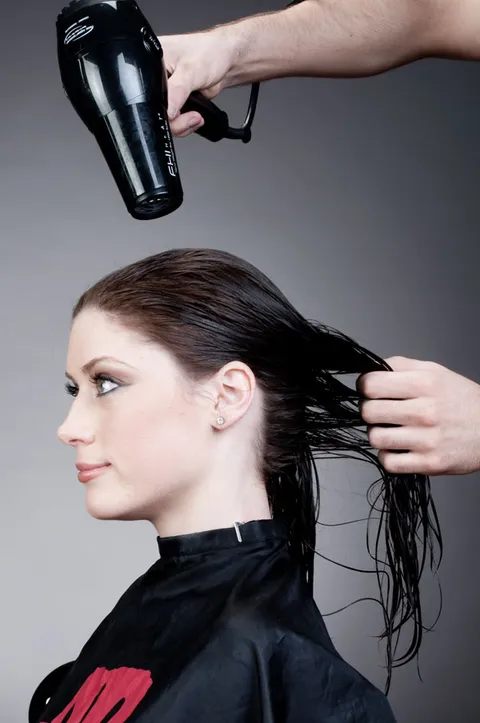
- Rough blow-dry to about 80 per cent.
- Product applied section by section, half a centimetre off the root.
- Processing, 20–30 minutes.
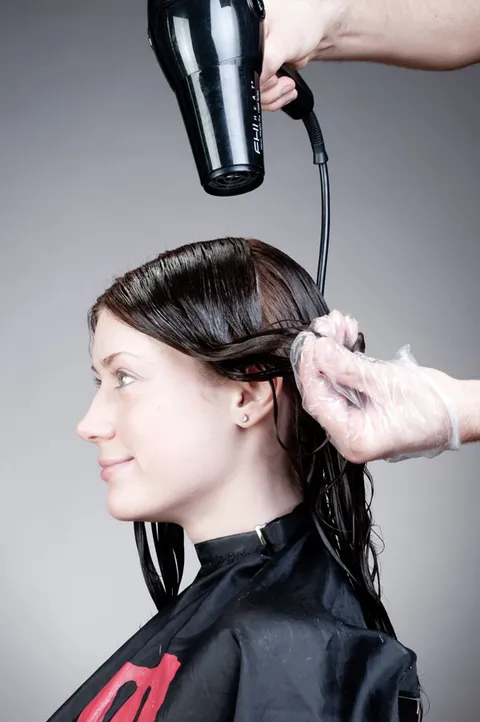
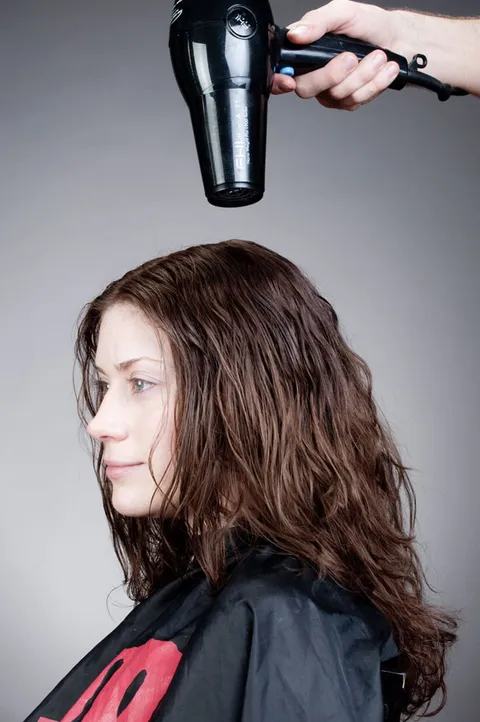
- Full blow-dry.
- The sealing step: flat iron up to 230°C in fine sections — the most skill-dependent part of the whole service.
- Depending on the formula: rinse and mask the same day, or first wash after 72 hours on classic systems.
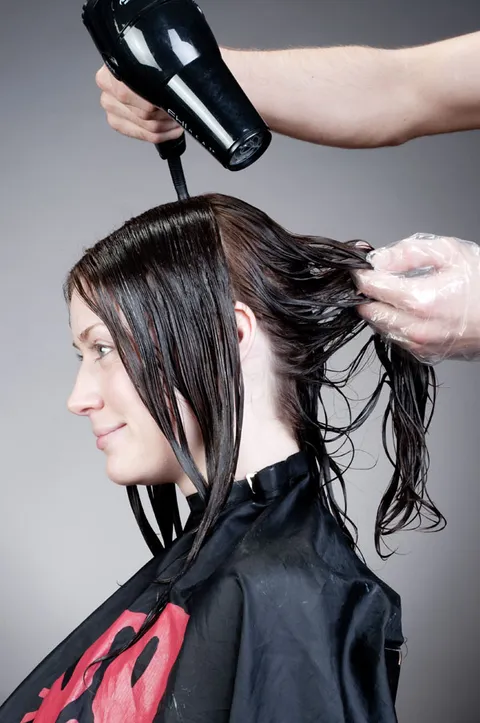
- Style. Two to four hours in the chair, by length and density.
Results and longevity
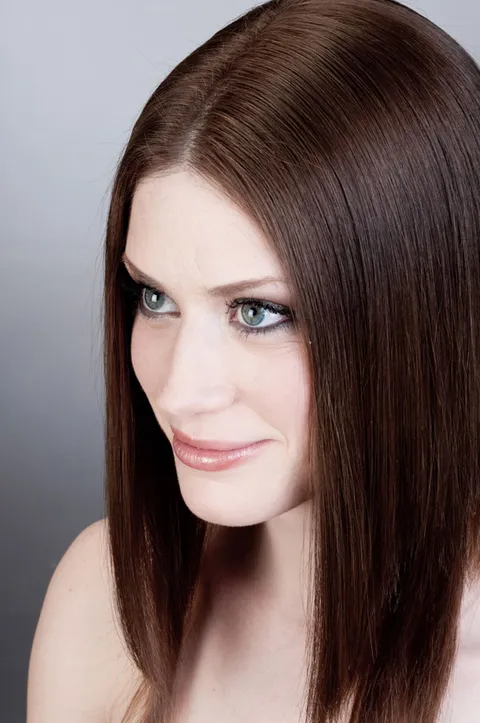
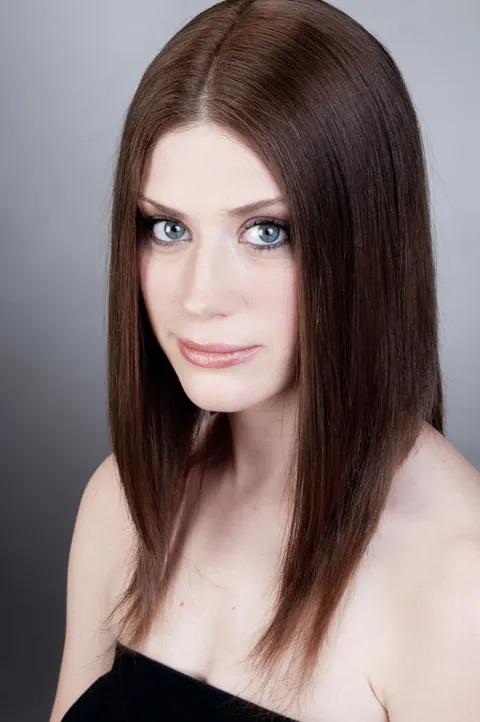
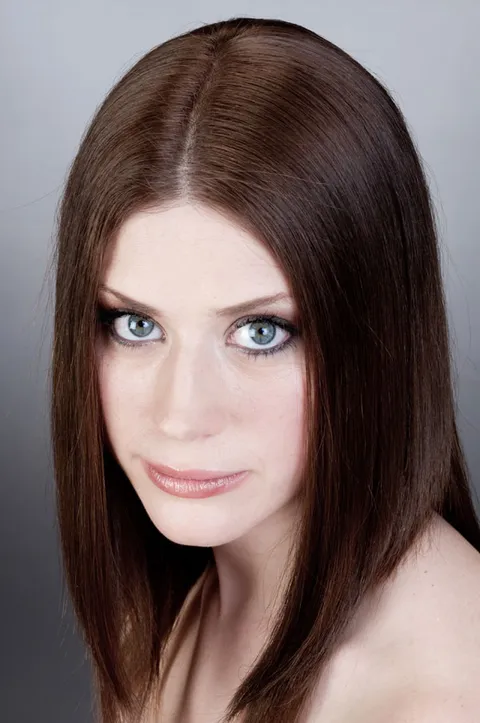
Up to about 90 percent frizz reduction, curl loosened by roughly half, glass-like shine. Lasts 3-5 months and fades evenly — no regrowth line, no lock-in. Safe to repeat two to three times a year.
Manufacturers and brand names
Brazilian Blowout, Keratin Complex (Coppola), Cadiveu Brasil Cacau, GK Hair (Juvexin), Cocochoco, Goldwell Kerasilk, KeraStraight, QOD, Honma Tokyo, Inoar G.Hair. On many menus the brand name IS the treatment name — see the Brazilian Blowout story.
At-home kits vs salon
Home "keratin" kits are essentially rich protein glosses: they smooth for two to six weeks and are excellent maintenance between salon visits. What they cannot do is safely replicate a 230-degree sealing pass in fine sections — that is where home attempts go wrong, from patchy results to genuine heat damage. Honest rule: kits for upkeep, salon for the transformation.
Home care — making it last
Wash with something gentle, and wash less often — every wash spends a little of it. Sulphate-free helps, and I am not going to tell you sulphates are poison, because they are not. Salt-free is on every aftercare list on earth and I have never once seen it proven, so treat it as belt-and-braces rather than a commandment. Classic formulas: the 72-hour window — no washing, ties, clips or tucking behind the ears while the coating cures. Heat protection every single styling session, because heat is what actually spends a treatment, not shampoo. And skip the weekly protein mask: your hair has just had all the protein it can hold, and more of it stiffens fine hair until it snaps.
Now let me tell you why every aftercare list in the world reads the same, because nobody else will. The treatment itself is 20, 50, maybe 100 millilitres out of a bottle that serves many heads. Sell every one of those heads a shampoo, a conditioner, a mask and a serum on the way out, and one product sale becomes four or five — every client, every visit, forever. The aftercare rules arrived with the sales rep, not the chemist. Some of the advice is genuinely good; none of the famous rules was ever measured; and the brands promising six months know perfectly well you will get what you get. Buy what you will actually use, and let nobody make your bathroom shelf a subscription.
Climate performance
Hard-water cities (London): mineral buildup dulls the coating and shortens its life — add a gentle chelating wash monthly. Hot, humid or beach climates (Hurghada, holidays): humidity resistance is keratin's superpower, but sea salt, chlorine and strong sun accelerate fade — saturate hair with fresh water before swimming, rinse straight after, mask weekly. Unprotected daily swimming can halve the lifespan.
What can go wrong
Over-application: flat, greasy-looking hair for weeks. Iron too hot on bleached hair: gummy texture and breakage — the true story behind most "keratin ruined my hair" posts is heat damage, not protein. Toner shift: warm tones creeping into blondes. Sensitivity: fumes and scalp irritation with aldehyde systems. Fixing a bad result: clarifying washes speed removal, bond-repair treatments rebuild, and a good cut removes the worst. Red flags before you book: a salon that cannot name the brand and chemistry, no visible ventilation, one price for every hair type.
Compared to
Japanese straightening — permanent, bone straight, regrowth line, bigger commitment. Nanoplastia — marketed as the clean successor; overlapping acid chemistry, stronger straighteningDOWN claim. Hair botox — repair and volume reduction, minimal straightening.
Zoltan's note
This is the one people ask for by name, usually meaning something else. StraighteningDOWN since 1999, keratin since 2004 — I have watched this treatment go from miracle to scandal to sensible, and it is sensible now.
What it genuinely does is kill frizz and loosen curl by about half. What it does not do is make you straight, and it fades rather than growing out, which for most people is the best thing about it. There is no line, no bad month five, no decision you cannot walk back.
I will say no if you want pin-straight, if your hair is fine and already flat, or if you will not use the aftercare. It is the flat iron that does the damage in this service, not the bottle — so ask who is holding it.
Questions
How long does a keratin treatment last?
Three to five months for most hair, fading gradually rather than growing out. Lifespan depends on wash frequency, water hardness, salt and chlorine exposure, and sulfate-free, salt-free aftercare. With the right routine most clients comfortably reach the four-month mark.
Can I wash my hair straight after?
With modern acid-based formulas, usually the same or next day — your stylist confirms which system was used. Classic formulas need the full 72-hour wait, with no ties, clips or tucking behind the ears, because the coating is still curing.
Will my hair be completely straight?
No — keratin smooths and de-frizzes rather than straightens. Expect your curl pattern loosened by around half and blow-dry time cut dramatically. For permanently pin-straight hair you want Japanese straighteningDOWN or rebonding instead.
Is keratin treatment safe?
Modern formol-free systems applied in a ventilated salon are considered low risk for most people. The safety debate concerns formaldehyde-releasing formulas, which Brazil bans outright and the US FDA has proposed banning. Ask which system your salon uses — a good one answers instantly.
Can I colour my hair as well?
Yes — colour first, ideally same day before the keratin, or wait about two weeks after. The treatment can soften toners slightly, so warn your colourist. Highlights and keratin pair beautifully because the protein smooths bleached lengths.
Can I tie my hair up?
After the first wash, yes. During the 72-hour window on classic formulas, no — bands and clips leave permanent dents in the curing coating. Modern acid systems often allow a loose tie the same evening.
Does it work on bleached hair?
Usually yes, often beautifully — porous bleached hair drinks up protein. Porosity also means faster processing, so a strand test is essential and iron temperature comes down. Severely compromised hair should be rebuilt with bond care first.
Can I swim on holiday with it?
Yes, with protection: soak hair in fresh water before the pool or sea, rinse immediately after, and mask weekly. Salt and chlorine are the fastest ways to strip keratin — unprotected daily swimming can halve its lifespan.