
Behind the chair · 19 October 2026 · 3 min read
Why your hair extensions do not blend: look at the movement, not just the colour
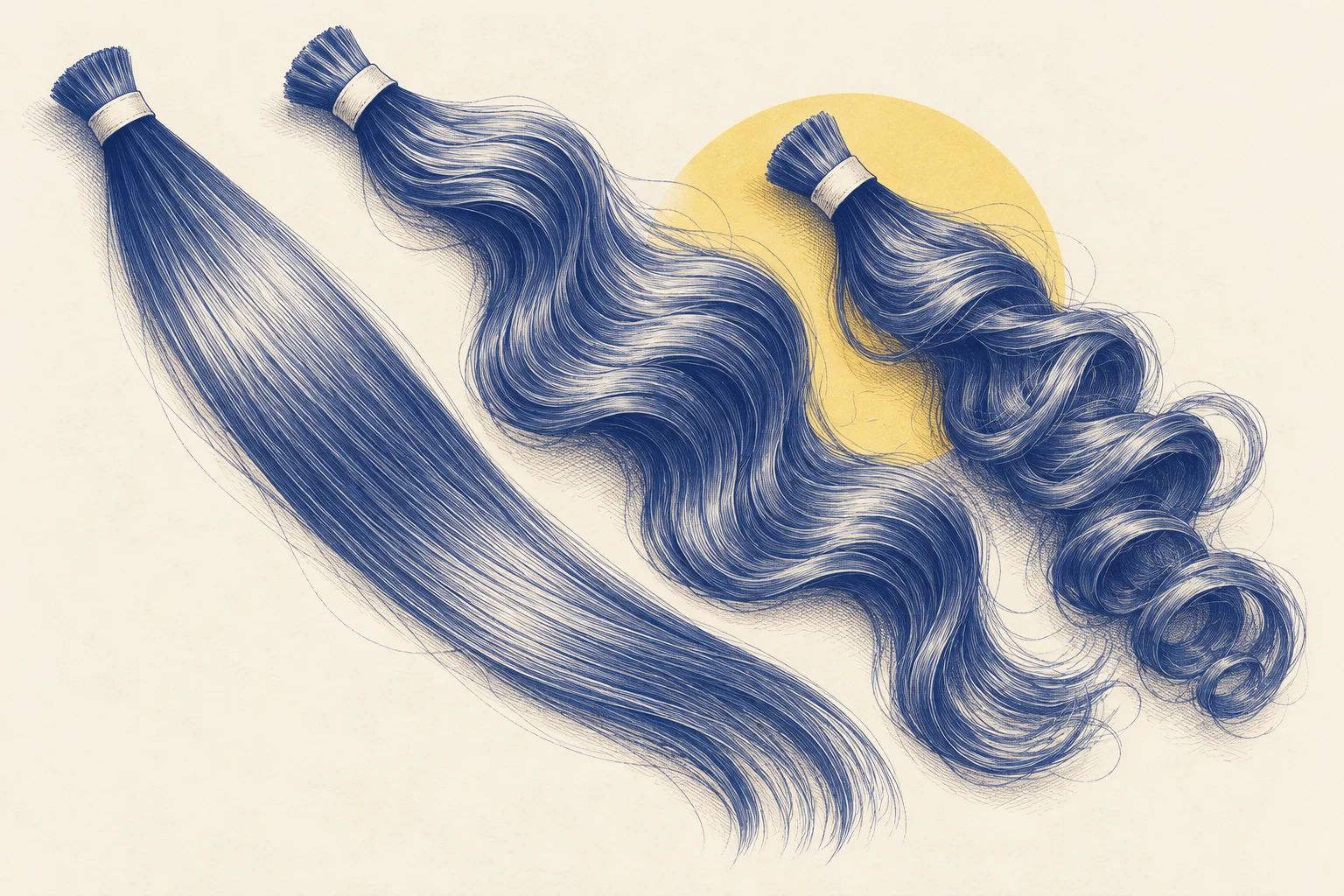
Extensions can look wrong beside your own hair even when you are happy with the colour. My starting point is to compare the movement, shape and finish of the two sections, rather than prescribe more smoothing. A photograph of a mismatch does not tell me that the extension hair can safely take another treatment.
You know the moment: the top looks like your hair, the bottom looks like something else. You smooth one section and another starts waving. It is frustrating, but “make it all straight” is a result request, not a diagnosis or a treatment plan.
First, show me the ordinary version
Bring photographs after your normal wash and dry, as well as the finish you are trying to create. Tell me which parts have been smoothed, straightened, coloured or permed. I would rather see what you actually live with than one carefully ironed photograph that hides the question. That is my consultation preference.
Then identify the added hair. The extension-types guide separates the fibre from the attachment. Those are different questions: a ring tells me how something is held, not everything about what it is holding.
Compare four things separately
- Colour. Is the mismatch in depth, tone or how the colours sit together? Do not reach straight for purple shampoo; use the colour guide first.
- Movement. Is your own hair waving while the extension length stays straighter, or the other way round? Tell me which finish you want to keep.
- Shape. Show the outline and where your natural ends meet the added length. Ask the relevant professional to assess the overall design.
- Your routine. Explain the time, tools and products you normally use. A finish that only works with a long salon styling session may not be the finish you want at home.
This is my assessment checklist. It is not a scientific test that assigns one cause to every visible line or fluffy section.
Do not ask the wrong hair to change
If you want to smooth your own hair, the next question is whether the added hair stays out of that treatment plan. If you want the extensions altered too, their supplier’s instructions become essential. Human-hair wording alone is not the answer.
For example, one primary manufacturer guide explicitly excludes chemical work on its extensions. That is enough to show why I cannot infer permission from a soft feel or a human-hair label. It does not establish the rules for every supplier. source
Where the hair history is unknown, I keep that unknown in the plan. I do not call it virgin because the packaging sounds reassuring. Read whether processed extensions can be treated again before spending money on another chemical appointment.
Choose the finish, then practise it
For a curly or wavy finish, my styling method is UP: scrunch up and diffuse up, without raking the shape down. My usual leave-in and gel pair uses both leave-on products. A separate heat spray or finishing oil would be a third product, so we need a different product choice or drying plan rather than quietly ignoring the limit. These are my methods, not promises about every formula.
For a straighter finish, ask me to show the appropriate drying for your own hair and check the extension system’s heat instructions separately. Keep styling tools away from attachment sites according to those instructions. Do not turn a general drying tip into an instruction to heat a bond. source
What I would do next
Write one sentence: “I want both parts to look like this after my ordinary routine.” Add photographs and the exact extension details. That gives the consultation a useful starting point. It also gives you a way to judge the proposed plan: does it address the mismatch you actually see?
If the added hair feels rough or looks different after smoothing, stop experimenting until the treatment history has been reviewed. Do not keep adding heat or chemistry to force a match. If you also have pain, scalp soreness or heavy shedding, use the safety route in the damage guide.
Questions
Can the same product make both textures match?
I would not promise that. Product choice comes after identifying the desired finish and the two hair histories.
Should I treat the extensions to match my own hair?
Only a product-specific professional assessment can consider that question. Start with the types guide, not an assumed treatment booking.
More from Behind the chair
- Can I colour my hair after a keratin treatment?
 Keratin first or extensions first? Plan the order around the actual hair
- Keratin & Hair Straightening in Yorkshire: Leeds, Sheffield, York, Bradford, Harrogate and Hull
Are you a pro? The full technique is on tecSture. For hairdressers →